News about agriculture in New York State and information farmers and consumers can use in their daily lives.
Showing posts with label poultry. Show all posts
Wednesday, August 22, 2018
New York State Fair Is Open For Business
The Great New York State Fair opened for its 2018 run at 7 a.m. Aug. 22.
For the next 13 days, people from throughout New York and elsewhere can see all that is great about New York State, from its technological innovations to the animals to agriculture to crafts and culinary specialties to entertainment to to the midway to law enforcement to, of course, FOOD.
And please, while having fun at the fair, don't forget the hard-working farmers who raise animals and crops to feed and clothe each and every one of us 365 days a year.
Be sure to stop in an animal barn or the horticulture building or the Agriculture Museum (which is celebrating its 90th birthday) and talk to a farmer or an apple grower or a beekeeper or a maple producer or Christmas tree grower.
Have fun at the fair, but remember to celebrate agriculture.
Tuesday, March 13, 2018
From the USDA:
The U.S. Department of Agriculture on March 12 announced the decision to withdraw the Organic Livestock and Poultry Practices final rule published Jan. 19, 2017.
The rule would have increased federal regulation of livestock and poultry for certified organic producers and handlers. The withdrawal becomes effective May 13.
Significant policy and legal issues were identified after the rule published in January 2017. After careful review and two rounds of public comment, USDA has determined that the rule exceeds the department’s statutory authority, and that the changes to the existing organic regulations could have a negative effect on voluntary participation in the National Organic Program, including real costs for producers and consumers.
“The existing robust organic livestock and poultry regulations are effective,” said USDA Marketing and Regulatory Program Undersecretary Greg Ibach. “The organic industry’s continued growth domestically and globally shows that consumers trust the current approach that balances consumer expectations and the needs of organic producers and handlers.”
According to USDA reports for 2017, the number of certified organic operations increased domestically by 7 percent and globally by 11 percent. Industry estimates show that organic sales in the United States reached almost $47 billion in 2016, reflecting an increase of almost $3.7 billion since 2015.
The USDA carefully considered public comments and the relative costs and benefits for both producers and consumers of imposing the proposed additional regulations.
More information on the Organic Livestock and Poultry Practices final rule is available in the March 12 Federal Register or https://www.ams.usda.gov/services/organic-certification at this link.
The U.S. Department of Agriculture on March 12 announced the decision to withdraw the Organic Livestock and Poultry Practices final rule published Jan. 19, 2017.
The rule would have increased federal regulation of livestock and poultry for certified organic producers and handlers. The withdrawal becomes effective May 13.
Significant policy and legal issues were identified after the rule published in January 2017. After careful review and two rounds of public comment, USDA has determined that the rule exceeds the department’s statutory authority, and that the changes to the existing organic regulations could have a negative effect on voluntary participation in the National Organic Program, including real costs for producers and consumers.
“The existing robust organic livestock and poultry regulations are effective,” said USDA Marketing and Regulatory Program Undersecretary Greg Ibach. “The organic industry’s continued growth domestically and globally shows that consumers trust the current approach that balances consumer expectations and the needs of organic producers and handlers.”
According to USDA reports for 2017, the number of certified organic operations increased domestically by 7 percent and globally by 11 percent. Industry estimates show that organic sales in the United States reached almost $47 billion in 2016, reflecting an increase of almost $3.7 billion since 2015.
The USDA carefully considered public comments and the relative costs and benefits for both producers and consumers of imposing the proposed additional regulations.
More information on the Organic Livestock and Poultry Practices final rule is available in the March 12 Federal Register or https://www.ams.usda.gov/services/organic-certification at this link.
Thursday, August 24, 2017
Learn About Ag With Tours, Text Messages at New York State Fair
Don't forget.
As you head to the New York State Fair, there are some more ways this year to learn about the state's biggest industry -- agriculture.
The
New York State Fair is offering fairgoers a new and exciting way to
learn more through free, guided. The tours will be led by MooU, a private
tour company, and will take visitors through the fair’s various animal
barns, offering insight about the animals and their place in
agriculture.
Tours will begin at the MooU tent, which will be located behind the Agriculture Museum. They will depart every hour starting at 10 a.m. daily
with the last tour departing at 5 p.m.
Tour #1, beginning at 10 a.m. and running every two hours, will include stops at the Dairy Cattle Barn, Beef Barn, Poultry Barn and the
Dairy Cow Birthing Center. Tour #2 will begin at 11 a.m, and run every two hours, stopping at the Goat, Sheep and Swine Barns as well as the World of Horses tent.
Fairgoers also have the chance to text an ag question to an expert on the fairgrounds.
Agricultural experts will monitor a text channel during the fair,
answering questions texted to them.
Signs in each of the barns will provide the phone number where text messages can be sent.
The New York State Fair, operated by the New York State Department of Agriculture and Markets, runs now through Sept. 4.
Labels:
2017 New York State Fair,
ag tours,
beef,
dairy cattle,
Dairy Cow Birthing Center,
equine,
goats,
New York agriculture,
New York farming,
poultry,
sheep,
swine,
text messaging
Saturday, July 1, 2017
July is National Grilling Month
July is National Grilling Month.
While it's true that some people grill year-round, July is highlighted as the weather has become very nice, more people are outside and it's the perfect time for cooking outside.
According to the National Day Calendar website, "Summer is the time for the best outdoor cooking, so it is no surprise July is National Grilling Month."
Anyone thinking of grilling can buy meat at area grocery stores, locally owned meat markets or -- better yet -- find a local farmer who raises beef, pork or poultry and buy fresh meat right from them.
That way, you not only will be getting local farm raised product, but you'll also be helping one of your neighbors by putting some money into their pockets.
So fire up that grill and get out and cook something! Oh and remember, in addition to meat, veggies also are great on the grill and those can be purchased from your local farmer too!!
Friday, June 23, 2017
2 Charged with Trying to Steal Cockfighting Birds
From the NY Attorney General's office:
Attorney General Eric T. Schneiderman said two people have been arrested for allegedly breaking into and attempting to steal about 50 chickens from a barn in Poland, Herkimer County.
The chickens had previously been rescued as part of the Attorney General’s “Operation Bloodsport” -- a five-month investigation into an alleged network of cockfighting in the Mohawk Valley that resulted in 41 arrests, and the seizure of gamecocks, heroin, guns and cash.
“It’s cruel, dangerous, and unlawful to torture animals for entertainment – and even more egregious to break in and try to steal those animals after their rescue,” said Schneiderman. “Poultry pilferers who try to fly the coop with our evidence will be brought to justice.”
Juan Jose Lucca Vega, 41, and Wanda Santos, 42, both of Utica, were arrested Tuesday evening and charged with a felony county of burglary and a count of training an animal for animal fighting for amusement.
Vega and Santos are alleged to have broken into a Herkimer barn Tuesday night, where the Attorney General’s Office and the Herkimer County Humane Society had moved the chickens following their rescue last weekend.
Prosecutors allege Vega and Santos broke padlocks authorities had installed on the barn doors and attempted to remove about 50 chickens, which were being treated for injuries sustained during cockfighting and are considered evidence in the case.
Vega and Santos were each arraigned in theNewport Town Court and sent to the Herkimer County Jail.
Their relationship to the other 41 individuals arrested as part of Operation Bloodsport is under investigation.
As announced earlier this week, in "Operation Bloodsport" state and local law enforcement agents – led by the New York State Attorney General's Organized Crime Task Force (OCTF) and the New York State Police – concluded a five-month investigation into a cockfighting network that was operating prohibited cockfights at a landscaping business in Herkimer County.
The operation drew participants from numerous New York counties including Bronx, Erie, Herkimer, Monroe, New York, Oneida, Onondaga and Queens.
The investigation resulted in the arrests of 41 individuals on June 17th for allegedly operating an illegal cockfighting operation in the town of Frankfort. Police seized nearly 200 gamecocks that were turned over to the Herkimer County Humane Society.
A subsequent search of an adjacent barn resulted in the discovery of a game bird breeding and training facility. Police also seized bird-fighting paraphernalia, such as spurs or razors, which are attached to a bird’s talons to increase the carnage of the fight.
In addition, heroin, several handguns, and over $68,000 in cash were seized. This investigation is part of Schneiderman's ongoing efforts to combat animal cruelty and illegal animal fighting across New York state through his Animal Protection Initiative.
Attorney General Eric T. Schneiderman said two people have been arrested for allegedly breaking into and attempting to steal about 50 chickens from a barn in Poland, Herkimer County.
The chickens had previously been rescued as part of the Attorney General’s “Operation Bloodsport” -- a five-month investigation into an alleged network of cockfighting in the Mohawk Valley that resulted in 41 arrests, and the seizure of gamecocks, heroin, guns and cash.
“It’s cruel, dangerous, and unlawful to torture animals for entertainment – and even more egregious to break in and try to steal those animals after their rescue,” said Schneiderman. “Poultry pilferers who try to fly the coop with our evidence will be brought to justice.”
Juan Jose Lucca Vega, 41, and Wanda Santos, 42, both of Utica, were arrested Tuesday evening and charged with a felony county of burglary and a count of training an animal for animal fighting for amusement.
Vega and Santos are alleged to have broken into a Herkimer barn Tuesday night, where the Attorney General’s Office and the Herkimer County Humane Society had moved the chickens following their rescue last weekend.
Prosecutors allege Vega and Santos broke padlocks authorities had installed on the barn doors and attempted to remove about 50 chickens, which were being treated for injuries sustained during cockfighting and are considered evidence in the case.
Vega and Santos were each arraigned in theNewport Town Court and sent to the Herkimer County Jail.
Their relationship to the other 41 individuals arrested as part of Operation Bloodsport is under investigation.
As announced earlier this week, in "Operation Bloodsport" state and local law enforcement agents – led by the New York State Attorney General's Organized Crime Task Force (OCTF) and the New York State Police – concluded a five-month investigation into a cockfighting network that was operating prohibited cockfights at a landscaping business in Herkimer County.
The operation drew participants from numerous New York counties including Bronx, Erie, Herkimer, Monroe, New York, Oneida, Onondaga and Queens.
The investigation resulted in the arrests of 41 individuals on June 17th for allegedly operating an illegal cockfighting operation in the town of Frankfort. Police seized nearly 200 gamecocks that were turned over to the Herkimer County Humane Society.
A subsequent search of an adjacent barn resulted in the discovery of a game bird breeding and training facility. Police also seized bird-fighting paraphernalia, such as spurs or razors, which are attached to a bird’s talons to increase the carnage of the fight.
In addition, heroin, several handguns, and over $68,000 in cash were seized. This investigation is part of Schneiderman's ongoing efforts to combat animal cruelty and illegal animal fighting across New York state through his Animal Protection Initiative.
Saturday, June 10, 2017
Stewart's Shops Join New York State Grown & Certified Program
From New York State:
The New York State Grown & Certified
program is expanding to include the New York dairy industry.
The state
is partnering with Stewart’s Shops to launch the promotional program
that distinguishes agricultural
products that are local and made by producers who meet safe food
handling best practices and demonstrate environmental stewardship.
Beginning next month, consumers will be able to find the NYS Certified
label on Stewart’s dairy products in more than 300 stores
across the state. Stewart’s egg supplier, Thomas Poultry Farm from
Schuylerville, is also participating in the program.
"The Grown & Certified program connects consumers with high-quality, farm-fresh New York products, while supporting our hard-working farms, businesses and local economies across the state," said Gov. Andrew Cuomo.
"By partnering with Stewart’s Shops,
we will expand this program to promote and provide a boost to some of
New York’s best producers and support the dairy industry's continued
growth and success," Cuomo said.
Starting in July, Stewart’s will launch new packaging for their half-gallon milk containers, which will prominently feature the New York State Certified label and a description of the program.
Signage in-store and at the gas pump,
as well as a promotional video,
are already in stores, helping to educate consumers about the Certified
program and what
it means to them. Many varieties of Stewart's milk, half and half,
heavy cream, and ice cream will all carry the Certified seal.
Stewart’s Shops, a longstanding and well-respected dairy processor, adheres to the New York State Grown & Certified food safety and environmental management plan requirements.
The company has stores in the Capital Region, North
Country,
Hudson Valley and Central New York regions. They proudly source all of
their milk from local farms in Saratoga, Rensselaer and Washington
counties.
In addition to Stewart’s dairy products, its eggs will feature the NYS Grown & Certified seal, highlighting Thomas Poultry Farm. The farm adheres to environmentally responsible practices and exceeds federal egg safety standards.
Thursday, April 13, 2017
State Warns Poultry Farmers About Avian Flu
From State Department of Agriculture and Markets
State Department of Agriculture and Markets Commissioner Richard A. Ball has reminded New York poultry farmers to practice biosecurity measures to prevent the spread of avian influenza.
Two cases of highly pathogenic H7N9 avian influenza have been reported in Tennessee and several cases of a less serious strain have been reported in Alabama, Georgia, Kentucky and Wisconsin. No cases have been reported in New York.
The avian influenza strains detected in other states are not considered to be threats to public health, but can be deadly to birds.
To prevent avian influenza from infecting poultry flocks in New York State, the Department is encouraging poultry producers and visitors to farms to follow best practices, which include:
** Discourage unnecessary visitors and use biosecurity signs to warn people not to enter buildings without permission
** Ask all visitors if they have had any contact with any birds in the past five days
** Forbid entry to employees and visitors who own any kind of fowl
** Require all visitors to cover and disinfect all footwear
** Lock all entrances to chicken houses after hours
** Avoid non-essential vehicular traffic on-farm
** After hauling birds to processors, clean and disinfect poultry transport coops and vehicles before they return to the farm
Report anything unusual, especially sick or dead birds, to the state Department of Agriculture and Markets.
State Department of Agriculture and Markets Commissioner Richard A. Ball has reminded New York poultry farmers to practice biosecurity measures to prevent the spread of avian influenza.
Two cases of highly pathogenic H7N9 avian influenza have been reported in Tennessee and several cases of a less serious strain have been reported in Alabama, Georgia, Kentucky and Wisconsin. No cases have been reported in New York.
The avian influenza strains detected in other states are not considered to be threats to public health, but can be deadly to birds.
To prevent avian influenza from infecting poultry flocks in New York State, the Department is encouraging poultry producers and visitors to farms to follow best practices, which include:
** Discourage unnecessary visitors and use biosecurity signs to warn people not to enter buildings without permission
** Ask all visitors if they have had any contact with any birds in the past five days
** Forbid entry to employees and visitors who own any kind of fowl
** Require all visitors to cover and disinfect all footwear
** Lock all entrances to chicken houses after hours
** Avoid non-essential vehicular traffic on-farm
** After hauling birds to processors, clean and disinfect poultry transport coops and vehicles before they return to the farm
Report anything unusual, especially sick or dead birds, to the state Department of Agriculture and Markets.
Tuesday, March 7, 2017
Avian Flu Hits Tyson Foods Chicken Supplier
Hope this doesn't http://cnycentral.com/news/nation-world/bird-flu-found-at-tyson-foods-chicken-supplier-03-06-2017 spread up to New York and end up pulling poultry out of the State Fair again.
Sunday, March 5, 2017
New York's Commercial Red Meat Production Up in January
Commercial red meat production for New York totaled 3.7 million pounds in January, up 21 percent from the 3 million pounds produced in January 2016.
Cattle slaughter totaled 3,000 head, up 7 percent from January 2016. The average live weight was up 14 pounds from the previous year, at 1,210.
Calf slaughter totaled 5,600 head, up 70 percent from January 2016. The average live weight was down 41 pounds from last year, at 115 pounds.
Hog slaughter totaled 5,400 head, up 59 percent from January 2016. The average live weight was down 4 pounds from the previous year, at 264 pounds.
Sheep slaughter totaled 4,400 head, 2 percent above last year. The average live weight was 104 pounds, down 3 pounds from January a year ago.
Cattle slaughter totaled 3,000 head, up 7 percent from January 2016. The average live weight was up 14 pounds from the previous year, at 1,210.
Calf slaughter totaled 5,600 head, up 70 percent from January 2016. The average live weight was down 41 pounds from last year, at 115 pounds.
Hog slaughter totaled 5,400 head, up 59 percent from January 2016. The average live weight was down 4 pounds from the previous year, at 264 pounds.
Sheep slaughter totaled 4,400 head, 2 percent above last year. The average live weight was 104 pounds, down 3 pounds from January a year ago.
Friday, December 2, 2016
USDA Proposes Amending Nutrition Label Regulations for Meat, Poultry
From the USDA:
The U.S. Department of Agriculture's Food Safety and Inspection Service Dec. 1 proposed a critical step in ensuring that consumers have updated nutritional information for meat and poultry products, helping Americans make better informed decisions when purchasing meat and poultry products.
The Food Safety and Inspection Service is proposing to amend the nutrition labeling regulations for meat and poultry products to parallel the U.S. Food and Drug Administration's final nutrition regulations, which were published May 27.
The proposed rule will improve the presentation of nutrition information to assist consumers in maintaining healthy dietary practices.
"This new rule will provide more transparency on nutrition labels so that American consumers can make informed decisions about the foods they eat and feed their families," said Alfred Almanza, Deputy Under Secretary for Food Safety at USDA. "The new nutrition facts panel will complement the many other proactive, prevention-based food policies that we've put in place in recent years."
Specifically, the Food Safety and Inspection Service is proposing to:
The U.S. Department of Agriculture's Food Safety and Inspection Service Dec. 1 proposed a critical step in ensuring that consumers have updated nutritional information for meat and poultry products, helping Americans make better informed decisions when purchasing meat and poultry products.
The Food Safety and Inspection Service is proposing to amend the nutrition labeling regulations for meat and poultry products to parallel the U.S. Food and Drug Administration's final nutrition regulations, which were published May 27.
The proposed rule will improve the presentation of nutrition information to assist consumers in maintaining healthy dietary practices.
"This new rule will provide more transparency on nutrition labels so that American consumers can make informed decisions about the foods they eat and feed their families," said Alfred Almanza, Deputy Under Secretary for Food Safety at USDA. "The new nutrition facts panel will complement the many other proactive, prevention-based food policies that we've put in place in recent years."
Specifically, the Food Safety and Inspection Service is proposing to:
- Update the list of nutrients that are required or permitted to be declared;
- Provide updated Daily Reference Values and Reference Daily Intake values that are based on current dietary recommendations from consensus reports;
- Amend the labeling requirements for foods represented or purported to be specifically for children under the age of 4 years and pregnant women and lactating women and establish nutrient reference values specifically for these population subgroups;
- Revise the format and appearance of the Nutrition Facts label;
- Amend the definition of a single-serving container;
- Require dual-column labeling for certain containers;
- Update and modify several reference amounts customarily consumed (reference amounts); and
- Consolidate the nutrition labeling regulations for meat and poultry products into a new Code of Federal Regulations part.
Monday, June 27, 2016
Gillibrand, Slaughter Write to USDA About Poultry Salmonella Testing Problems
From Sen. Kirsten Gillibrand's office:
U.S. Sens. Kirsten Gillibrand of New York and Dianne Feinstein of California and Reps. Rosa Luisa DeLauro of Connecticut and Louise Slaughter of New York on June 27 wrote to the U.S. Department of Agriculture urging them to revise current pathogen testing protocols to improve test accuracy and protect the public health.
The members wrote to Agriculture Secretary Thomas J. Vilsack in response an article published this month by the Agricultural Research Service which suggested the USDA's use of three antimicrobial sanitizers commonly used to reduce pathogens on poultry carcasses may cause false-negative results for Salmonella.
Testing for Salmonella plays a critical role in the department’s inspection program to protect the safety of the food supply and the public’s health. Given the diversity of processing plants in the country and recent results of the Broiler Carcass Rinsates study, the members are calling on the department to ensure that the use of chemical sprays and dips do not create false negative test results.
“We have to be vigilant when it comes to monitoring the safety of our food. This report is a reminder of the importance of good and efficient oversight when it comes to maintaining a safe food supply,” said Gillibrand, the first New York senator to serve on the Senate Agriculture Committee in about 40 years.
“We should never be placed in the position to question testing results in our poultry," she said. "The USDA should provide a thorough risk assessment and respond to the recent scientific findings of false-negative results to ensure we can remain confident in the safety of the food we buy for our families.”
“Recent studies calling into question the safety of the nation’s poultry processing are deeply troubling and highlight a major deficiency in our food safety system. The USDA must take these studies seriously and take immediate action to ensure that we are not masking the threat of Salmonella,” said DeLauro.
U.S. Sens. Kirsten Gillibrand of New York and Dianne Feinstein of California and Reps. Rosa Luisa DeLauro of Connecticut and Louise Slaughter of New York on June 27 wrote to the U.S. Department of Agriculture urging them to revise current pathogen testing protocols to improve test accuracy and protect the public health.
The members wrote to Agriculture Secretary Thomas J. Vilsack in response an article published this month by the Agricultural Research Service which suggested the USDA's use of three antimicrobial sanitizers commonly used to reduce pathogens on poultry carcasses may cause false-negative results for Salmonella.
Testing for Salmonella plays a critical role in the department’s inspection program to protect the safety of the food supply and the public’s health. Given the diversity of processing plants in the country and recent results of the Broiler Carcass Rinsates study, the members are calling on the department to ensure that the use of chemical sprays and dips do not create false negative test results.
“We have to be vigilant when it comes to monitoring the safety of our food. This report is a reminder of the importance of good and efficient oversight when it comes to maintaining a safe food supply,” said Gillibrand, the first New York senator to serve on the Senate Agriculture Committee in about 40 years.
“We should never be placed in the position to question testing results in our poultry," she said. "The USDA should provide a thorough risk assessment and respond to the recent scientific findings of false-negative results to ensure we can remain confident in the safety of the food we buy for our families.”
“Recent studies calling into question the safety of the nation’s poultry processing are deeply troubling and highlight a major deficiency in our food safety system. The USDA must take these studies seriously and take immediate action to ensure that we are not masking the threat of Salmonella,” said DeLauro.
“Ensuring the health and well-being of American people is of the utmost importance and
the USDA must do more to keep food-borne illnesses out of the nation’s food supply. American lives depend on it,” she said.
“This study is extremely troubling. We should never have to worry that the food we put on our plates could expose our families to dangerous Salmonella infection because of possibly faulty testing methods by the USDA," said Slaughter, of the Rochester area.
"I look forward to hearing more from Secretary
Vilsack so we can be sure that the USDA is doing everything it can to
eliminate false-negative results and protect public health,” she said.
Tuesday, May 31, 2016
Birds Will Be Back at State Fair and County Fairs This Summer
| An exhibit at the State Fair in 2014 |
State Agriculture Commissioner Richard A.
Ball on May 31 announced the end of the ban on all live fowl competitions and
exhibits at the Great New York State Fair and at all county fairs in New
York.
The first poultry show at the state Fairgrounds since the ban took place will be at the fairgrounds this coming weekend.
The state Department of Agriculture and Markets issued the ban in June 2015 to prevent the
spread of strains of highly pathogenic avian influenza (HPAI), which killed
millions of birds across the country in 2014-2015 and was confirmed by the U.S.
Department of Agriculture as being the worst outbreak of HPAI in U.S.
history.
“New York took an aggressive approach to
preventing the spread of avian influenza and it paid off,” Ball said. “I am very proud to say that thanks to the cooperation of farmers,
suppliers, distributors, and live bird markets, as well as the hard work of the
Department’s Division of Animal Industry, the outbreak did not affect a single
bird in the state and we look forward to their return at fairs this summer.”
“Lifting this ban was possible due to the
efforts of the poultry industry, here in New York and throughout the U.S., to
stop the spread of HPAI and to improve biosecurity practices. We are
indebted to state and federal animal health officials who contained HPAI in the
Midwest," said state Veterinarian Dr. David Smith.
"While we are
confident the threat has diminished and bird competitions can resume, it’s
important to note that the virus causing HPAI may arise any time, so our
producers must remain vigilant and continue to adhere to the best practices for
preventing the spread of this disease,” Smith said.
The Great New York State Fair is accepting entries for its poultry competitions and exhibits. Exhibitors
can register their animals by going to http://nysfair.ny.gov/competitions/how-to-enter/ this link.
In 2014, about 1,200
poultry and pigeons were brought to the fair for various competitions and
exhibits. The ban has also been lifted for all chartered county fairs and
youth fairs in New York State.
There are 45 county fairs and six youth
shows for the fair season, which runs from June through October.
Oswego County Fair President Carol Sweeney said the poultry will be back at the annual county fair in Sandy Creek, but birds will be checked out and tested by a vet before entering the fairgrounds.
“Our fairgoers and our exhibitors look
forward to these competitions every year and we are excited to bring them back.
They are not only fun, but also an important educational opportunity for
thousands of Fair visitors each year," said Acting Fair Director Troy Waffner.
For more
information, visit the state Department of Agriculture and
Markets website at www.agriculture.ny.gov
Sunday, April 10, 2016
It's National Farm Animals Day
Each year on April 10, we celebrate all those animals on the farm.
It's National Farm Animals Day. Annually observed April 10, National Farm Animals Day was created as a day to raise awareness about farm animals and to find home for the abandoned and abused farm animals.
For more information regarding National Farm Animals Day, see: http://www.farmanimalsday.com/
![]() |
| Sheep |
It's National Farm Animals Day. Annually observed April 10, National Farm Animals Day was created as a day to raise awareness about farm animals and to find home for the abandoned and abused farm animals.
![]() |
| Beef cattle |
Saturday, March 19, 2016
It's National Poultry Day!
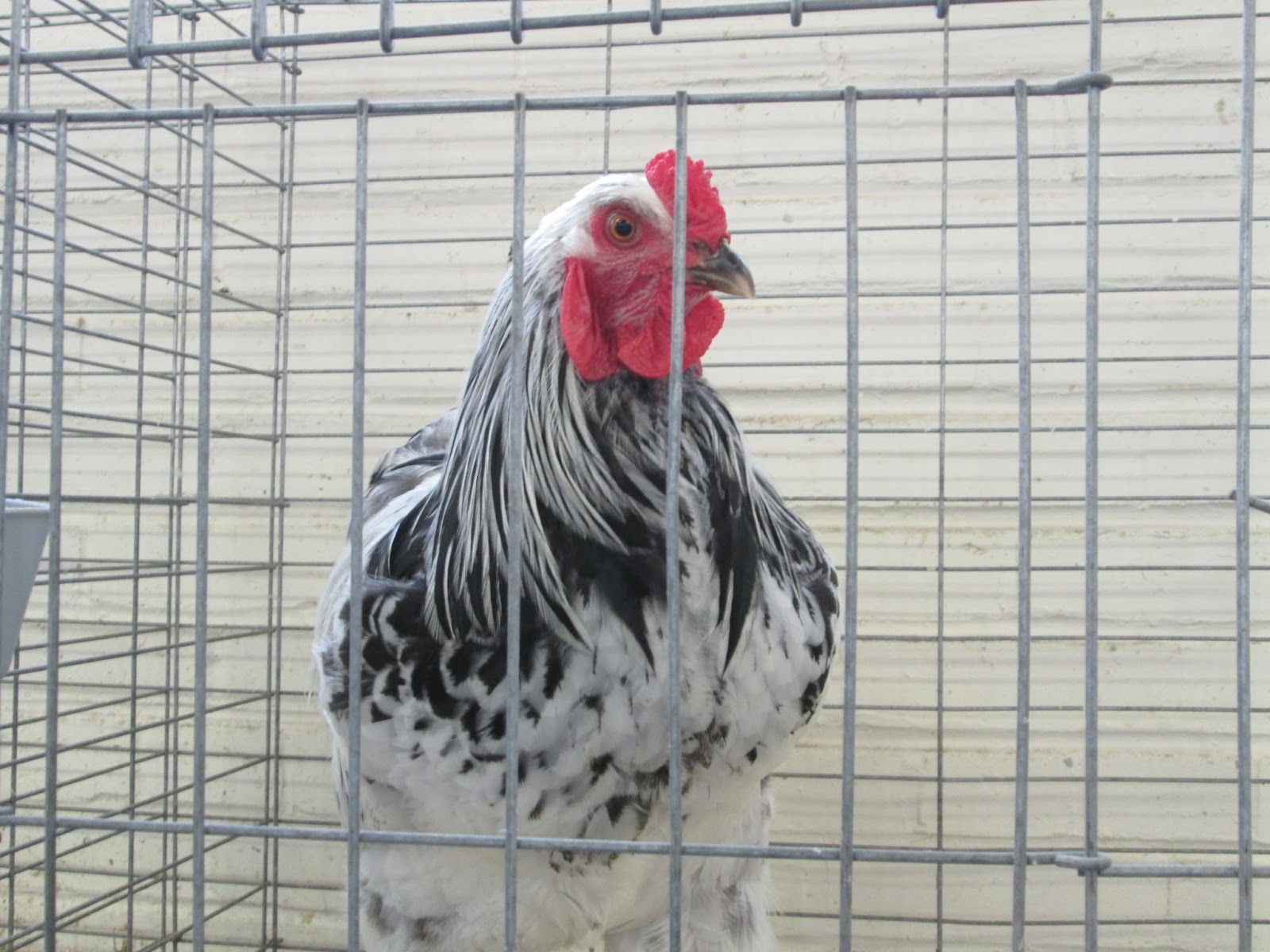
| A bird on display at the New York State Fair. |
It's National Poultry Day. The National Calendar Day website states:
"Eggs and turkey bacon for breakfast, an open faced turkey avocado sandwich for lunch and then perhaps a good, ol’ fashioned fried chicken dinner to finish off the day as March 19th celebrates National Poultry Day."
Poultry refers to domestic birds raised for meat and eggs. This includes chicken, turkey, ducks, geese, quail and pheasant. Poultry are farmed in great numbers with chickens being the most numerous.
It is believed chickens were introduced to American soil by the European explorers in the 16th century. Chicken consumption in the United States increased during World War II due to a shortage of beef and pork."
Thursday, February 11, 2016
New Federal Standards Finalized to Reduce Poultry Foodborne Illnesses
From the office of U.S. Sen. Kirsten Gillibrand:
The U.S. Department of Agriculture's Food Safety and Inspection Service finalized new federal standards that will reduce the risk of foodborne illnesses from poultry.
The new standards are targetd at Salmonella and Campylobacter in chicken parts and ground chicken and turkey products. The Food Safety and Inspection Service will use these new pathogen standards to assess the food safety performance of establishments that process these types of poultry products.
The Centers for Disease Control and Prevention estimate that Salmonella and Campylobacter cause nearly two million foodbome illnesses, 27,500 hospitalizations, and over 450 deaths each year. Further, the CDC reports current food safety regulations have not reduced the number of illnesses caused by Salmonella since 2000.
The U.S. Department of Agriculture's Food Safety and Inspection Service finalized new federal standards that will reduce the risk of foodborne illnesses from poultry.
The new standards are targetd at Salmonella and Campylobacter in chicken parts and ground chicken and turkey products. The Food Safety and Inspection Service will use these new pathogen standards to assess the food safety performance of establishments that process these types of poultry products.
The Centers for Disease Control and Prevention estimate that Salmonella and Campylobacter cause nearly two million foodbome illnesses, 27,500 hospitalizations, and over 450 deaths each year. Further, the CDC reports current food safety regulations have not reduced the number of illnesses caused by Salmonella since 2000.
U.S. Sens. Kirsten Gillibrand, Dianne Feinstein and Dick Durbin, in announcing the new standards, said they have pushed for updated and improved
pathogen standards to better match the variety of poultry products
consumers purchase today.
The new pathogen standards, sampling methods,
and public notification regarding food company performance
will provide a more thorough assessment of a company’s food safety
system and whether additional measures to ensure food safety are needed.
The new standards will require
Salmonella contamination rates of no more than 25 percent for
ground chicken and no more than 13.5 percent for ground turkey. In
contrast, the old standards allow 44.6 percent contamination for ground
chicken and 49.9 percent for ground turkey.
For chicken parts, the standards will require Salmonella contamination rates of no more than 15.4 percent and Campylobacter contamination rates of no more than 7.7 percent. The standards also will require Campylobacter contamination rates of no more than 1.9 percent for ground chicken and no more than 1.9 percent for ground turkey. Previously, there were no federal standards for pathogens in chicken parts or for Campylobacter in ground chicken and turkey.
As part of their ongoing efforts to improve food safety, the senators have also asked the USDA to update pathogen standards for beef and pork products.
For chicken parts, the standards will require Salmonella contamination rates of no more than 15.4 percent and Campylobacter contamination rates of no more than 7.7 percent. The standards also will require Campylobacter contamination rates of no more than 1.9 percent for ground chicken and no more than 1.9 percent for ground turkey. Previously, there were no federal standards for pathogens in chicken parts or for Campylobacter in ground chicken and turkey.
As part of their ongoing efforts to improve food safety, the senators have also asked the USDA to update pathogen standards for beef and pork products.
Thursday, December 17, 2015
New York Ag Receipts Outpace National Averages
From New York state:
The growth of agricultural sales in New York outpaced the national average, with cash receipts up 36 percent across the state and only 32 percent nationally.
In 2014, farmers in New York state also set a new record for sales with $6.36 billion in cash receipts, up from $4.7 billion in 2010, representing a nearly $1.7 billion increase in gross income from sales of crops, livestock and other products.
New York has seen a surge in average gross income and a significant increase in sales of many of the state’s top commodities. Since 2010, the following commodities have shown the greatest increases:
The growth of agricultural sales in New York outpaced the national average, with cash receipts up 36 percent across the state and only 32 percent nationally.
In 2014, farmers in New York state also set a new record for sales with $6.36 billion in cash receipts, up from $4.7 billion in 2010, representing a nearly $1.7 billion increase in gross income from sales of crops, livestock and other products.
New York has seen a surge in average gross income and a significant increase in sales of many of the state’s top commodities. Since 2010, the following commodities have shown the greatest increases:
· Poultry and eggs up 63 percent to $206 million;
· Peaches up 80 percent to $12.6 million;
· Honey production up 59 percent to just under $9 million;
· Cattle production up 132 percent to $415 million; and
· Hay up 173 percent to $147 million.
The national estimates for the same commodities for the same period are:
· Poultry and eggs up 39 percent;
· Peaches up 2 percent;
· Honey production up 38 percent;
· Cattle production up 59 percent; and
· Hay up 63 percent.
The
New York dairy industry also saw record high dairy prices in 2014,
constituting about half of the state’s agricultural receipts.
Sunday, October 25, 2015
Get Fresh Turkeys Right in New York State
![]() |
| Turkeys enjoy the sunshine at Violet Hill Farm in Herkimer County. |
Empire Farm & Dairy
New York doesn’t rank in the top 10 in turkey-producing states, but several farms here still raise and process fresh gobblers.
Although most are small operations, they have devoted followers, take reservations for birds early in the year, and sell out quickly.
One such turkey producer is Mary Carpenter, who runs Violet Hill Farm in West Winfield in southern Herkimer County.
Carpenter said she didn’t plan on being a farmer. She was a makeup artist working in New York City, but one day, she went to the farmers market with a friend and met a farmer named Paul Densch-Layton, who was selling meat from his farm.
“He and I became friends,” Carpenter said. “He was ready to bow out of the farm, and he asked me if I wanted to help him out during lambing season.”
As she says on the Violet Hill Farm website, “the rest is history.”
Mary and Paul still are a couple, are raising five children, and they’re running a farm complete with turkeys, chickens, lambs, pigs, rabbits, geese, eggs, wild mushrooms, medicinal herbs and fruits.
Mary also sells skin-care products, soaps, lip balms, deodorants and herbal tinctures.
This year, she has 300 turkeys ready to go for Thanksgiving; they range in weight from 10 to 25 pounds. (To order a turkey, go to www.violethillfarm.com.)
Carpenter and other turkey producers in New York said this year has been challenging due to the Avian (bird) flu problem in the Midwest.
While the bird flu hasn’t shown up in New York, the poultry industry has taken stringent precautions to ensure the strain stays away from the Empire State. Among the precautions: prohibiting poultry shows at any county fair or at the New York State Fair this year.
“Some producers had a difficult time getting poults this year,” Carpenter said.
A poult is a turkey only 1 or 2 days old that producers buy and then raise for the Thanksgiving or Christmas season.
Some farmers, such as Ortensi Farms in Richfield Springs, Otsego County, usually sell turkeys but have none this year. Burl Creek Farm in Clyde, Wayne County, has only 42 birds this year, compared with 70 last year, saidf farm owner Rachel Burley.
And consumers should be beware of prices this year. The bird flu and some producers not being able to get enough poults to raise have led to some prices that might be higher this year than last.
Number of turkeys produced and value for 2013:
Minnesota, 44 million, $747,056,000
North Carolina, 34 million, $757,435,000
Arkansas, 28 million, $372,400,000
Indiana, 17.5 million, $441,061,000
Missouri, 17 million, $361,760,000
Virginia, 15.5 million, $267,995,000
California, 13 million, $242,925,000
South Carolina, 12 million, $318,402,000
Pennsylvania, 7 million, $113,582,000
Ohio, 5.5 million, value $155,031.000
Total for 2013 – 240 million, birds produced, value of $4,839,562,000 For more stories like this one, subscribe to Empire Farm & Dairy magazine.
Wednesday, June 24, 2015
Buy Local Onondaga Grown Campaign Kicks Off
| Onondaga County Legislature chair Ryan McMahon and Legislator David Knapp kick off the Buy Local Onondaga Grown campaign at Reeves Farm Wednesday morning. |
The Onondaga County Agriculture Council kicked off the county's "Buy Local. Buy Onondaga Grown" campaign Wednesday morning at Reeves Farm in Lysander.
The campaign will help educate the public on all that Onondaga County has to offer through its agriculture industry.
The county's more than 700 farms each year pumps about $152 million into the local economy, preserves pristine farmland for all the enjoy and provides consumers with the freshest vegetables, fruits, dairy products, meats, poultry and eggs, honey, maple, flowers and Christmas trees than they can find anywhere.
"What sets this campaign apart is that it provides a direct link between what the community will hear on local media and what they will see at retailers across Onondaga County," said county Legislator David Knapp, who also is co-chair of the Agriculture Council.
The campaign includes billboards, radio spots, a blog on I Heart Radio stations (http://www.b1047.net/features/onondaga-grown-837/) and stickers boasting the Buy Local. Buy Onondaga Grown. on produce and products at area grocery stores.
Since now is the middle of strawberry season, the kickoff event includes Reeves Farm strawberries served over Byrne Dairy ice cream.
To keep engaged with the Buy Local. Buy Onondaga Grown. campaign, go to Twitter at twitter.com/OnondagaGrown, Facebook at facebook.com/OnondagaGrown or to the website at wsyr.com/features/onondaga-grown-837/
Tuesday, June 2, 2015
New Regulations Restricting Movement of Poultry Announced
News from the state Department of Agriculture and Markets:
An Avian Influenza Biosecurity Brochure is also available at
http://www.agriculture.ny.gov/ HPAI_Brochure.pdf
and on the Department’s Facebook page.
For more information, please visit the New York State Department of Agriculture and Markets website at www.agriculture.ny.gov
State
Agriculture Commissioner Richard A. Ball today announced new
regulations restricting the movement of poultry into the state
to prevent the
spread of strains of highly pathogenic avian influenza (HPAI) in
poultry flocks in New York state.
The rapidly expanding viral outbreak
has already affected nearly 50 million birds in the Midwest and the U.S.
Department of Agriculture (USDA) has confirmed the current outbreak is the worst in U.S. history.
The new regulations require that all live poultry moved into New York must be:
- From a source flock in which 30 birds were tested for avian influenza within ten days prior to entry into New York State; or
- From a source flock that has been certified by the state of origin as an Avian Influenza Monitored Flock; or
- From a source flock certified as clean of HPAI under the National Poultry Improvement Plan (NPIP).
All
hatching eggs and day-old chicks imported into New York must be from a
source flock certified as clean of HPAI under the NPIP.
“The
U.S. is in uncharted waters with this disease, and we need to exercise
every bit of caution to minimize the incidence of avian influenza in
our state’s poultry population,” Commissioner Ball said. “New York’s
poultry industry is an important part of the state’s agriculture economy
and this regulation will build on the proactive measures already
taken — from the ban of all fowl exhibits and competitions
at fairs to rigorous testing of birds moving into the marketing
system — to continue to safeguard our flocks.”
According
to the USDA, 10 percent of the egg-laying hens in the U.S. have already been
lost as well as over 6 percent of the nation's live turkey inventory. States
such as Iowa,
Minnesota, Wisconsin and Nebraska have sustained the greatest damage to
their poultry farms.
The virus has not been found in poultry flocks in New
York state or in neighboring states, though it has been found in two
flocks in the Canadian province of Ontario.
Agriculture
officials such as Department of Agriculture and Markets State
Veterinarian Dr. David Smith recognize the threat to farm livelihoods
posed by this disease. With a total domestic poultry population of about 7.5 million birds,
New York’s poultry industry generates roughly $150 million in sales
annually.
"HPAI
can wipe out an entire egg-laying flock in less than a week and we
still don't fully understand how it spread so quickly from farm to farm
in the Upper Midwest,”
Dr. Smith said. “While we hope hot, dry summer weather will slow down
the virus spread, that is by no means certain. We encourage everyone
who keeps poultry to be very careful about minimizing their birds'
exposure to avian influenza.”
The
Department today also released publications intended to raise awareness
about biosecurity measures and help poultry farms and visitors to
poultry
farms learn how to prevent the introduction and spread of HPAI. The
fact sheets (available at
http://www.agriculture.ny.gov/ AI/bird_flu.html)
created by Dr. Smith and his staff provide information on best
practices farmers and visitors can use to avoid carrying the virus into
or out of farms.
Among the practices outlined in the fact sheets are tips for poultry farms:
**
Require all visitors to use covers on their footwear and to disinfect all footwear.
**
Lock all entrances to chicken houses after hours.
** Ask all visitors if they have had any contact with any kind of bird in the past five days.
**
Forbid from entry employees and visitors who own any kind of fowl.
** Discourage unnecessary visitors and use biosecurity signs to warn people not to enter buildings without permission.
Among the tips for visitors:
**
Never enter a farm without permission.
**
Wear clean clothes and shoes for any visit to a farm.
**
Stay in the parking lot on arrival and call for an escort onto the farm.
**
Do not touch animals unless it's part of your job.
**
Report anything unusual, especially sick or dead birds.
While
experts are concerned about the avian flu's impact on farms, they also emphasize
that the virus subtypes that are causing the current outbreak are not a
threat to the
public. Officials stress that chicken and eggs are safe to eat.
Avian
influenza outbreaks are not uncommon, but the current outbreak is
particularly deadly to birds.The outbreak is concentrated in two
strains
of influenza – H5N2 and H5N8. Influenza has been found in birds on more
than 210 farms in 15 states and in wild birds in five more states in
the West, Midwest and South, and two Canadian provinces.
In
addition to this new regulation and the recent ban of fowl exhibits at
the New York State Fair, all county fairs held in the state, and all
chartered
youth fairs, New York is taking a strongly proactive stance with
suppliers, distributors and live bird markets in attempting to prevent
the spread of avian influenza and prevent birds with influenza from
crossing into the state.
Bird flocks intended for the
live bird sales market must test negative for avian influenza before
they can move into the marketing system. Once birds are in the marketing
system, state officials verify test records and monitor sanitation
levels at the live bird markets.
In
addition, employees of the Department’s Division of Animal Industry
routinely test poultry in live bird markets for avian influenza. In
2014,
approximately 35,000 birds in the New York live bird marketing system
were tested for the disease. Any bird that tests positive is traced back
to its original flock to address possible infections.
For more information, please visit the New York State Department of Agriculture and Markets website at www.agriculture.ny.gov
Subscribe to:
Posts (Atom)