Showing posts with label poultry inspections. Show all posts

Monday, June 27, 2016

Gillibrand, Slaughter Write to USDA About Poultry Salmonella Testing Problems

From Sen. Kirsten Gillibrand's office:

U.S. Sens. Kirsten Gillibrand of New York and Dianne Feinstein of California and Reps. Rosa Luisa DeLauro of Connecticut and Louise Slaughter of New York on June 27 wrote to the U.S. Department of Agriculture urging them to revise current pathogen testing protocols to improve test accuracy and protect the public health. 

The members wrote to Agriculture Secretary Thomas J. Vilsack in response an article published this month by the Agricultural Research Service which suggested the USDA's use of three antimicrobial sanitizers commonly used to reduce pathogens on poultry carcasses may cause false-negative results for Salmonella.

Testing for Salmonella plays a critical role in the department’s inspection program to protect the safety of the food supply and the public’s health. Given the diversity of processing plants in the country and recent results of the Broiler Carcass Rinsates study, the members are calling on the department to ensure that the use of chemical sprays and dips do not create false negative test results.

“We have to be vigilant when it comes to monitoring the safety of our food. This report is a reminder of the importance of good and efficient oversight when it comes to maintaining a safe food supply,” said Gillibrand, the first New York senator to serve on the Senate Agriculture Committee in about 40 years.


“We should never be placed in the position to question testing results in our poultry," she said. "The USDA should provide a thorough risk assessment and respond to the recent scientific findings of false-negative results to ensure we can remain confident in the safety of the food we buy for our families.”

“Recent studies calling into question the safety of the nation’s poultry processing are deeply troubling and highlight a major deficiency in our food safety system. The USDA must take these studies seriously and take immediate action to ensure that we are not masking the threat of Salmonella,” said DeLauro. 

“Ensuring the health and well-being of American people is of the utmost importance and the USDA must do more to keep food-borne illnesses out of the nation’s food supply. American lives depend on it,” she said.

“This study is extremely troubling. We should never have to worry that the food we put on our plates could expose our families to dangerous Salmonella infection because of possibly faulty testing methods by the USDA," said Slaughter, of the Rochester area. 

"I look forward to hearing more from Secretary Vilsack so we can be sure that the USDA is doing everything it can to eliminate false-negative results and protect public health,” she said.

Tuesday, May 31, 2016

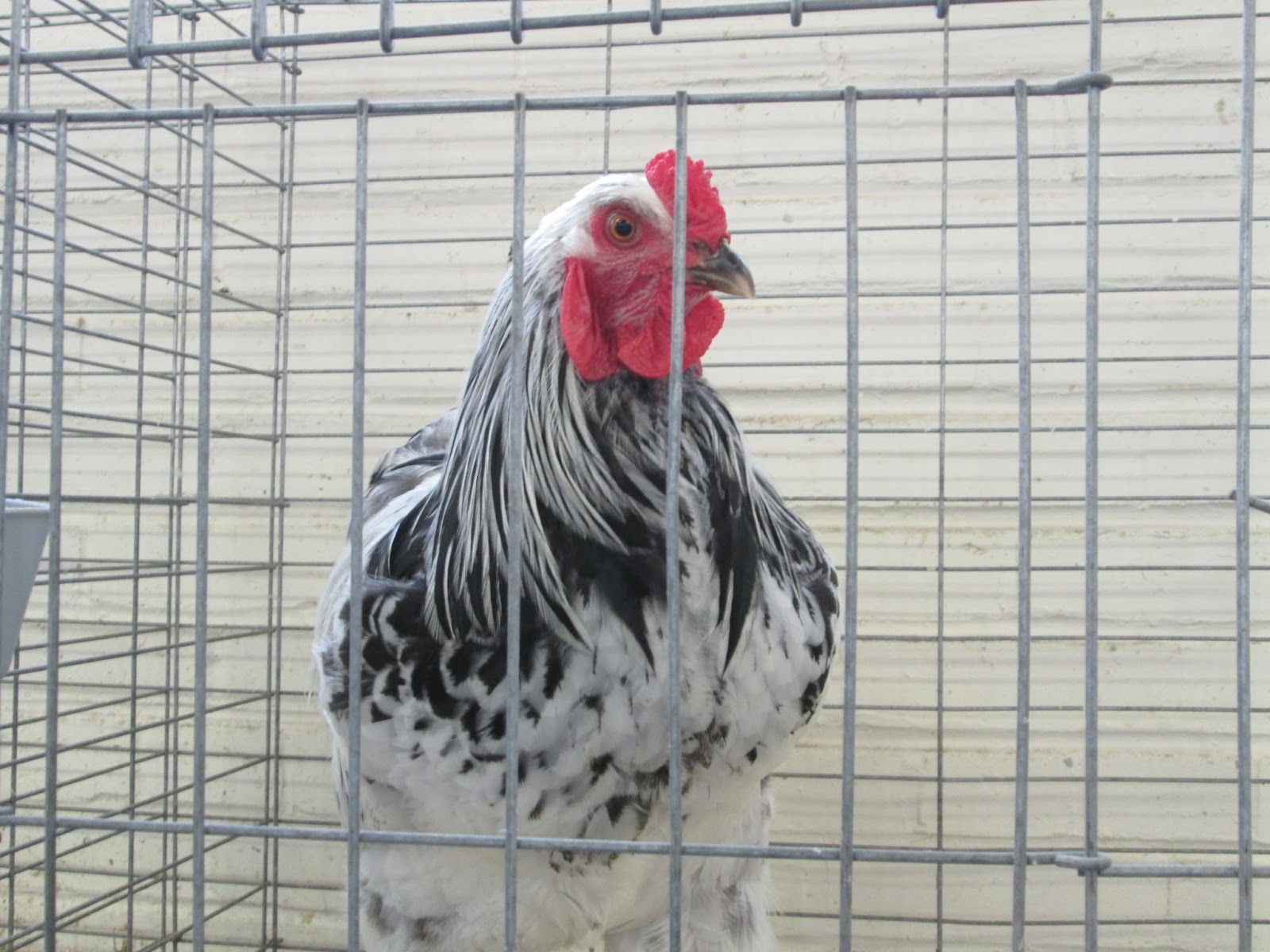
Birds Will Be Back at State Fair and County Fairs This Summer

An exhibit at the State Fair in 2014
News from the state Department of Agriculture and Markets:


State Agriculture Commissioner Richard A. Ball on May 31 announced the end of the ban on all live fowl competitions and exhibits at the Great New York State Fair and at all county fairs in New York.  

The first poultry show at the state Fairgrounds since the ban took place will be at the fairgrounds this coming weekend.

The state Department of Agriculture and Markets issued the ban in June 2015 to prevent the spread of strains of highly pathogenic avian influenza (HPAI), which killed millions of birds across the country in 2014-2015 and was confirmed by the U.S. Department of Agriculture as being the worst outbreak of HPAI in U.S. history.   
 
“New York took an aggressive approach to preventing the spread of avian influenza and it paid off,” Ball said. “I am very proud to say that thanks to the cooperation of farmers, suppliers, distributors, and live bird markets, as well as the hard work of the Department’s Division of Animal Industry, the outbreak did not affect a single bird in the state and we look forward to their return at fairs this summer.”

“Lifting this ban was possible due to the efforts of the poultry industry, here in New York and throughout the U.S., to stop the spread of HPAI and to improve biosecurity practices. We are indebted to state and federal animal health officials who contained HPAI in the Midwest," said state Veterinarian Dr. David Smith.

"While we are confident the threat has diminished and bird competitions can resume, it’s important to note that the virus causing HPAI may arise any time, so our producers must remain vigilant and continue to adhere to the best practices for preventing the spread of this disease,” Smith said.

The Great New York State Fair is accepting entries for its poultry competitions and exhibits.  Exhibitors can register their animals by going to http://nysfair.ny.gov/competitions/how-to-enter/ this link.

In 2014, about 1,200 poultry and pigeons were brought to the fair for various competitions and exhibits. The ban has also been lifted for all chartered county fairs and youth fairs in New York State. 

There are 45 county fairs and six youth shows for the fair season, which runs from June through October. 

Oswego County Fair President Carol Sweeney said the poultry will be back at the annual county fair in Sandy Creek, but birds will be checked out and tested by a vet before entering the fairgrounds.

“Our fairgoers and our exhibitors look forward to these competitions every year and we are excited to bring them back. They are not only fun, but also an important educational opportunity for thousands of Fair visitors each year," said Acting Fair Director Troy Waffner.

For more information, visit the state Department of Agriculture and Markets website at www.agriculture.ny.gov

Tuesday, June 2, 2015

New Regulations Restricting Movement of Poultry Announced

News from the state Department of Agriculture and Markets:

State Agriculture Commissioner Richard A. Ball today announced new regulations restricting the movement of poultry into the state to prevent the spread of strains of highly pathogenic avian influenza (HPAI) in poultry flocks in New York state.  

The rapidly expanding viral outbreak has already affected nearly 50 million birds in the Midwest and the U.S. Department of Agriculture (USDA) has confirmed the current outbreak is the worst in U.S. history.

The new regulations require that all live poultry moved into New York must be:
  • From a source flock in which 30 birds were tested for avian influenza within ten days prior to entry into New York State; or
  • From a source flock that  has been certified by the state of origin as an Avian Influenza Monitored Flock; or
  • From a source flock certified as clean of HPAI under the National Poultry Improvement Plan (NPIP). 
All hatching eggs and day-old chicks imported into New York must be from a source flock certified as clean of HPAI under the NPIP.

“The U.S. is in uncharted waters with this disease, and we need to exercise every bit of caution to minimize the incidence of avian influenza in our state’s poultry population,” Commissioner Ball said.  “New York’s poultry industry is an important part of the state’s agriculture economy and this regulation will build on the proactive measures already taken  — from the ban of all fowl exhibits and competitions at fairs to rigorous testing of birds moving into the marketing system — to continue to safeguard our flocks.” 

According to the USDA, 10 percent of the egg-laying hens in the U.S. have already been lost as well as over 6 percent of the nation's live turkey inventory. States such as Iowa, Minnesota, Wisconsin and Nebraska have sustained the greatest damage to their poultry farms.  

The virus has not been found in poultry flocks in New York state or in neighboring states, though it has been found in two flocks in the Canadian province of Ontario.

Agriculture officials such as Department of Agriculture and Markets State Veterinarian Dr. David Smith recognize the threat to farm livelihoods posed by this disease. With a total domestic poultry population of about 7.5 million birds, New York’s poultry industry generates roughly $150 million in sales annually.

"HPAI can wipe out an entire egg-laying flock in less than a week and we still don't fully understand how it spread so quickly from farm to farm in the Upper Midwest,” Dr. Smith said. “While we hope hot, dry summer weather will slow down the virus spread, that is by no means certain.  We encourage everyone who keeps poultry to be very careful about minimizing their birds' exposure to avian influenza.”

The Department today also released publications intended to raise awareness about biosecurity measures and help poultry farms and visitors to poultry farms learn how to prevent the introduction and spread of HPAI. The fact sheets (available at http://www.agriculture.ny.gov/AI/bird_flu.html) created by Dr. Smith and his staff provide information on best practices farmers and visitors can use to avoid carrying the virus into or out of farms.

Among the practices outlined in the fact sheets are tips for poultry farms:
**   Require all visitors to use covers on their footwear and to disinfect all footwear.
**   Lock all entrances to chicken houses after hours.
**  Ask all visitors if they have had any contact with any kind of bird in the past five days.
**  Forbid from entry employees and visitors who own any kind of fowl.
** Discourage unnecessary visitors and use biosecurity signs to warn people not to enter buildings without permission.

Among the tips for visitors:
**   Never enter a farm without permission.
**   Wear clean clothes and shoes for any visit to a farm.
**   Stay in the parking lot on arrival and call for an escort onto the farm.
**   Do not touch animals unless it's part of your job.
**  Report anything unusual, especially sick or dead birds.

While experts are concerned about the avian flu's impact on farms, they also emphasize that the virus subtypes that are causing the current outbreak are not a threat to the public. Officials stress that chicken and eggs are safe to eat. 

Avian influenza outbreaks are not uncommon, but the current outbreak is particularly deadly to birds.The outbreak is concentrated in two strains of influenza – H5N2 and H5N8. Influenza has been found in birds on more than 210 farms in 15 states and in wild birds in five more states in the West, Midwest and South, and two Canadian provinces.  

In addition to this new regulation and the recent ban of fowl exhibits at the New York State Fair, all county fairs held in the state, and all chartered youth fairs, New York is taking a strongly proactive stance with suppliers, distributors and live bird markets in attempting to prevent the spread of avian influenza and prevent birds with influenza from crossing into the state. 

Bird flocks intended for the live bird sales market must test negative for avian influenza before they can move into the marketing system. Once birds are in the marketing system, state officials verify test records and monitor sanitation levels at the live bird markets.

In addition, employees of the Department’s Division of Animal Industry routinely test poultry in live bird markets for avian influenza. In 2014, approximately 35,000 birds in the New York live bird marketing system were tested for the disease. Any bird that tests positive is traced back to its original flock to address possible infections.

An Avian Influenza Biosecurity Brochure is also available at http://www.agriculture.ny.gov/HPAI_Brochure.pdf and on the Department’s Facebook page.    

For more information, please visit the New York State Department of Agriculture and Markets website at www.agriculture.ny.gov

Monday, December 22, 2014

New Members Named to National Advisory Committee on Meat and Poultry Inspection

The following are new members of the National Advisory Committee on Meat and Poultry Inspection  for the 2014-2016 term:

Dr. Michael Crupain, Consumer Product Safety and Sustainability; George Wilson, Wilson & Associates, LLC; Dr. Tanya Roberts, Center for Foodborne Illness Research and Prevention; Kurt Brandt, United Food and Commercial Workers International Union; Dr. Dustin Oedekoven, South Dakota Animal Industry Board; Dr. Krzysztof Mazurczak, Illinois Department of Agriculture; Michael Frances Link Jr., Ohio Department of Agriculture; Dr. Manpreet Singh, Purdue University; Dr. Randall K. Phebus, Kansas State University; Dr. Patricia Curtis, Auburn University; Brian Sapp, White Oak Pastures, Inc.; Sherri Jenkins, JBS, USA, LLC; Dr. Betsy Booren, American Meat Institute; Dr. Alice Johnson, Butterball, LLC.

Returning members are: Sherika Harvey, Mississippi Department of Agriculture; Dr. Carol L. Lorenzen, University of Missouri; Dr. Michael L. Rybolt, Hillshire Brands Company; Dr. John A. Marcy, University of Arkansas; and Christopher A. Waldrop, Consumer Federation of America.

Established in 1971, the 17-member advisory committee meets on food safety concerns and advises the U.S. Secretary of Agriculture on matters affecting federal and state inspection program activities. It also contributes to USDA's regulatory policy development.

The new members were announced by Agriculture Secretary Thomas Vilsack.